
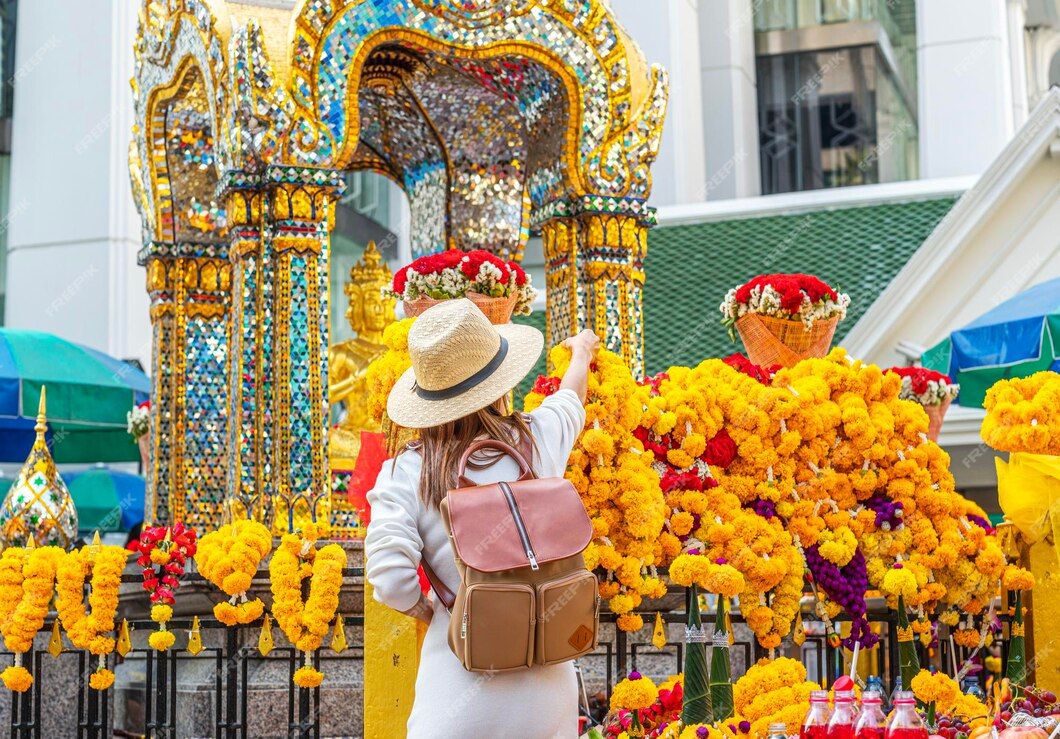
TAGTHAi Free Audio Tour: MANIFESTING BANGKOK
Why TAGTHAi Free Audio Tour ?
TAGTHAi Free Audio Tour: MANIFESTING BANGKOK invites you to explore this intersection of faith and modern city life.
This self-guided experience takes you through the spiritual landmarks of Ratchaprasong, explaining their history, cultural significance, and their role in contemporary Bangkok.
In this area, spirituality and business go hand in hand. The tradition is often linked to the story of the Erawan Shrine, which was built during the construction of the former Erawan Hotel to resolve a series of setbacks. After that, the project became successful. Since then, many buildings here have followed the practice of installing shrines as symbols of protection and prosperity.
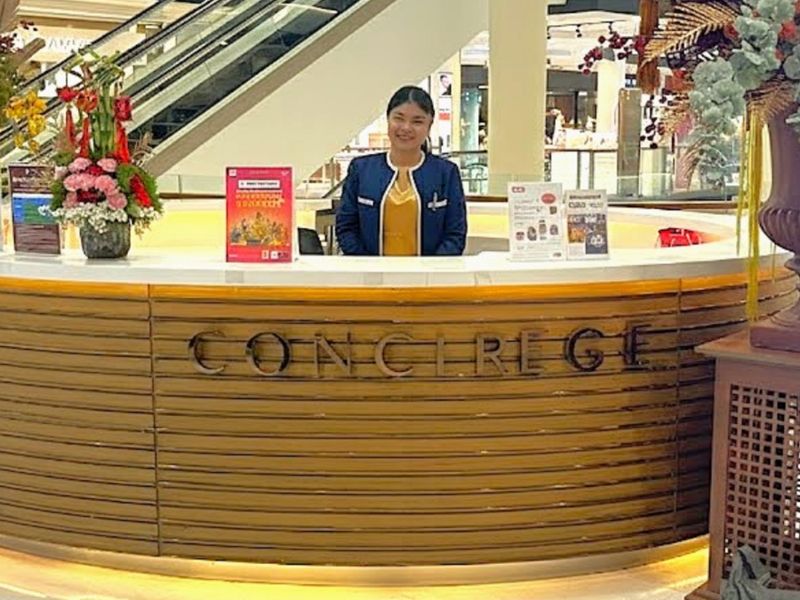
Staring Point
Start from Concierge Center on the 2nd floor of gaysorn centre (opposite Starbucks) near BTS Chit Lom Exit 6.
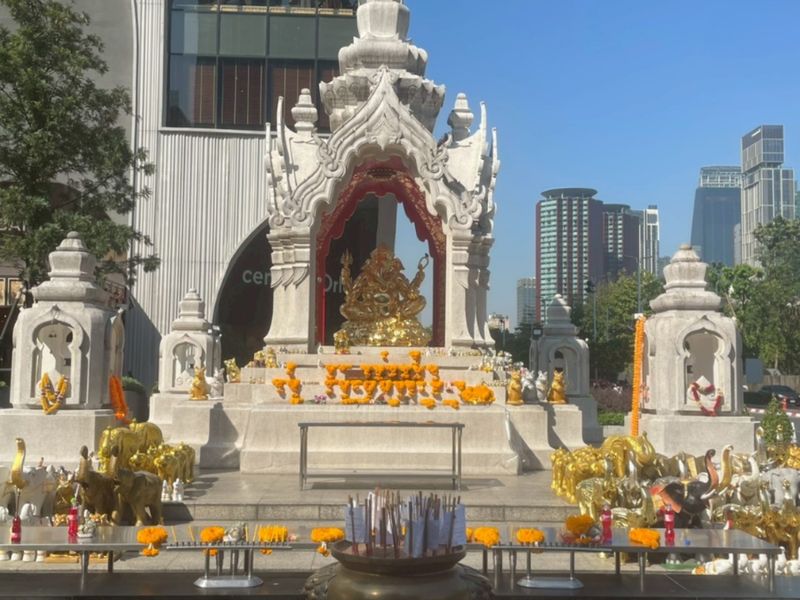
Ganesha Shrine
He is one of the most revered gods in this district. Devotees come here to pray for career advancement, academic achievement, business growth, and new beginnings. In Thai belief, Ganesha is often the first deity worshipped before starting any important endeavor to ensure smooth progress and positive outcomes.
According to Hindu mythology, Ganesha was created by Goddess Parvati to guard her. When Lord Shiva returned and was stopped by the boy, he became angry and unknowingly cut off his own son’s head. Upon realizing the truth, Shiva restored him by placing an elephant’s head upon him and blessed him as the remover of obstacles. Since then, Ganesha has been worshipped first, symbolizing wisdom, protection, and success.
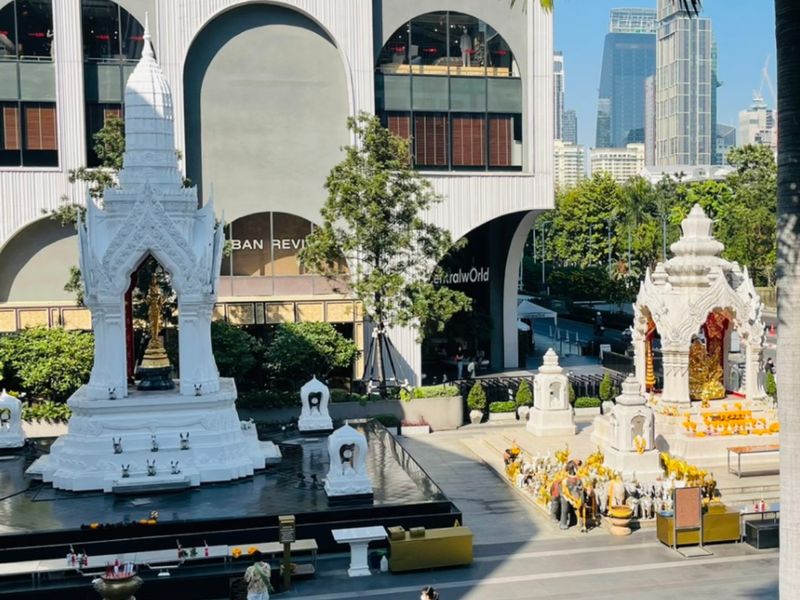
Trimurti Shrine
The Trimurti Shrine is often known by modern locals as the “Cupid of Bangkok.” It has become a popular place for those seeking love, whether they are hoping to find a partner or wishing for a stronger, more stable relationship.
In Hindu belief, the Trimurti represents the unity of three principal deities: Brahma the Creator, Vishnu the Preserver, and Shiva the Destroyer. Together, they symbolize the complete cycle of existence — creation, balance, and transformation. Because this divine union reflects harmony and universal balance, many worshippers believe it can help bring stability and fulfillment to their love life.
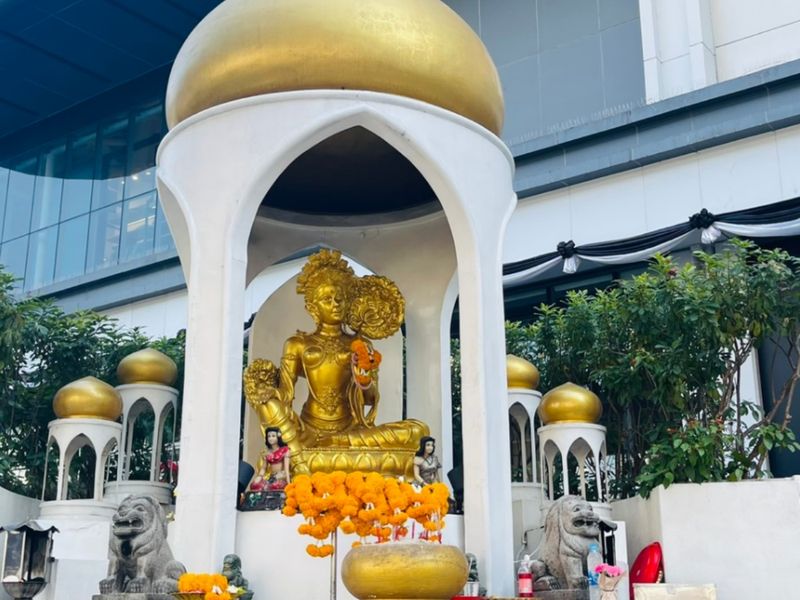
Umadevi (Parvati) Shrine
Umadevi, also known as Parvati, is the mother of Lord Ganesha and the consort of Lord Shiva. In Hindu belief, she is one of the three great goddesses of heaven, alongside Saraswati and Lakshmi. She is widely revered as the Goddess of Compassion and represents love, devotion, and feminine strength.
According to legend, in her first life she was born as Sati. When her father publicly insulted her husband, Shiva, she sacrificed herself to defend his honor. She was later reborn as Parvati and devoted herself to winning Shiva’s heart once again through patience, determination, and deep meditation. Because of her unwavering love and resilience, she has become a powerful symbol of loyalty, inner strength, and feminine power.
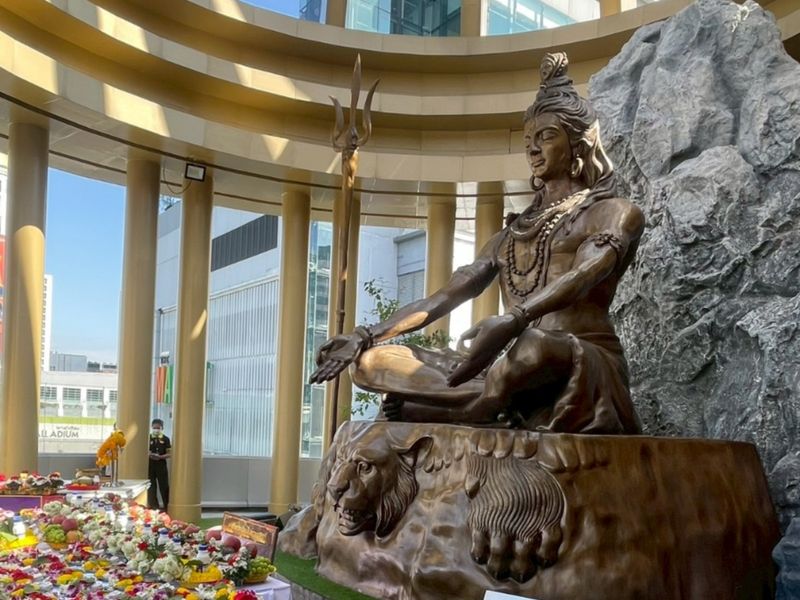
Lord Shiva Shrine
Lord Shiva is known as the Lord of Creation and Destruction. In Hindu belief, destruction does not signify total ruin, but rather transformation. Shiva represents the idea that every ending creates space for a new beginning. He removes what is harmful, outdated, or negative so that renewal and growth can take place. For this reason, many people pray to him when they feel stuck, unlucky, or overwhelmed by life’s challenges.
You may notice the third eye on his forehead. According to legend, when opened, it releases a powerful fire that destroys evil and resets the universe. Symbolically, this third eye represents insight and the clearing away of obstacles and negative forces. Devotees come here to ask Shiva to remove debts, illness, conflict, and misfortune — and to open the path toward new opportunities, new work, and fresh beginnings.
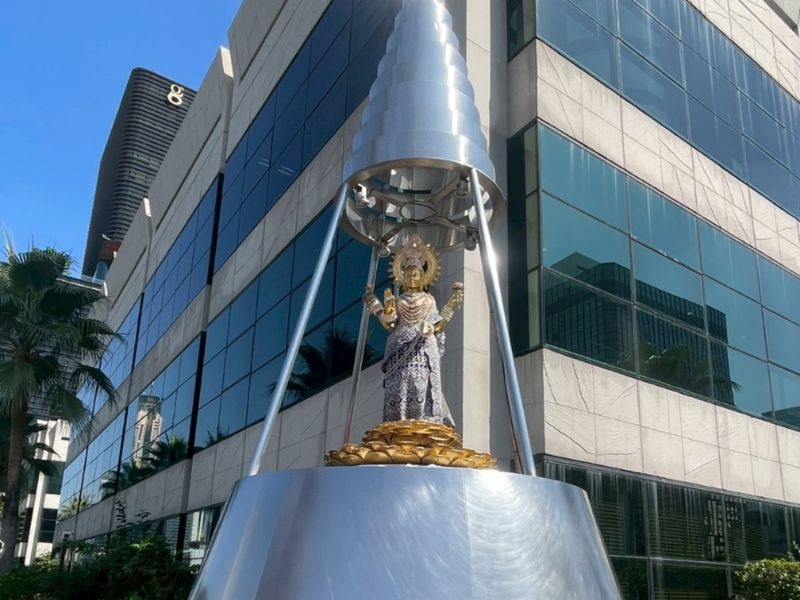
Lakshmi Shrine
The Lakshmi Shrine is dedicated to the Goddess of Wealth and Prosperity. She is widely revered for bringing success, abundance, and good fortune.
According to Hindu mythology, Lakshmi emerged during the great “Churning of the Ocean of Milk,” a cosmic event in which gods and giants sought the elixir of immortality. She rose gracefully from the ocean while standing upon a lotus flower — a symbol of purity, prosperity, and spiritual beauty. Because of this sacred origin, Lakshmi is honored as the goddess of wealth, success, and material abundance, and many devotees come to pray for financial stability and prosperity in their lives.
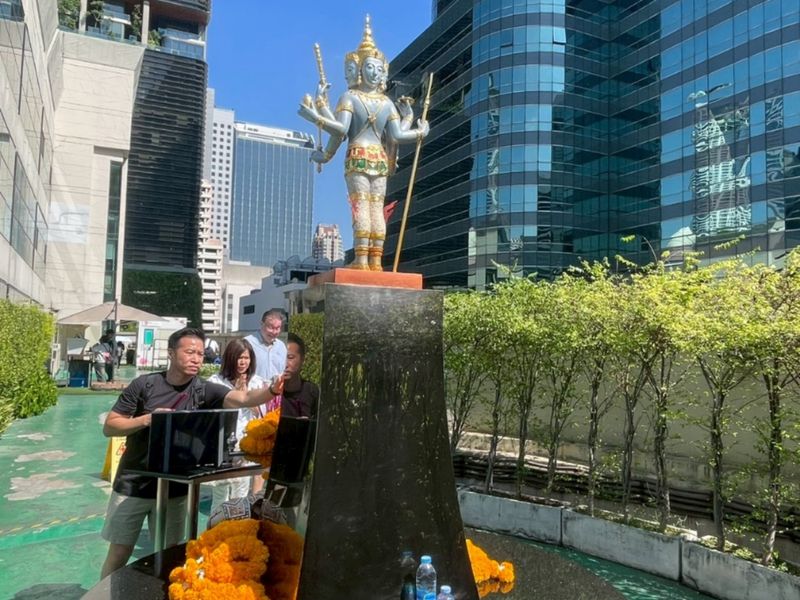
Jatulokbal Shrine
The Jatulokbal Shrine is dedicated to the Four Heavenly Kings, celestial guardians in both Hindu and Buddhist belief. They are believed to protect the four cardinal directions — North, South, East, and West — symbolizing protection, stability, and universal order.
Each guardian represents different aspects of protection and blessings. The Northern Guardian is often associated with wealth and safe travel, making him popular among businesspeople and frequent travelers. The Southern Guardian is linked to authority, leadership, and reputation. The Eastern Guardian is connected to the arts and entertainment. The Western Guardian is commonly associated with property, finance, and overall stability in life. Devotees visit this shrine to seek protection and balance in various aspects of their personal and professional lives.
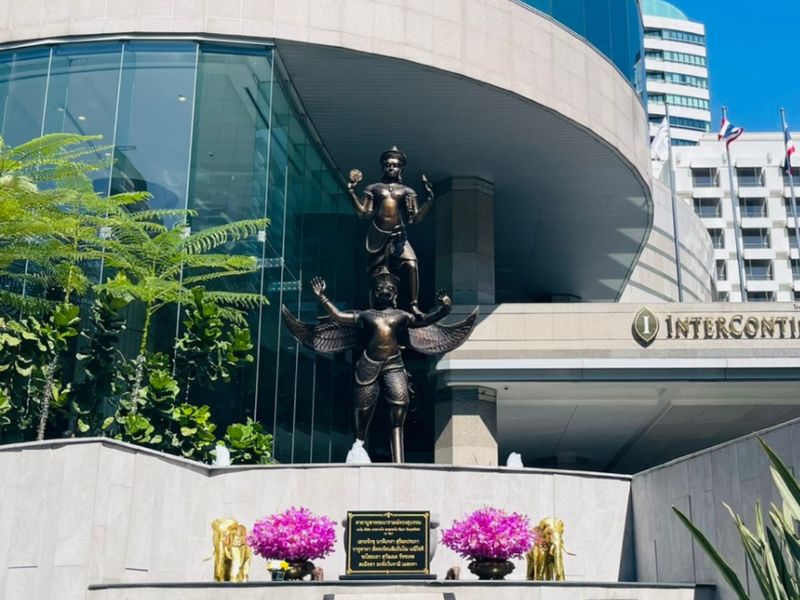
Narayana Riding Garuda Shrine
This statue depicts Narayana riding Garuda. If you look closely at his crown, you may notice elements of ancient Khmer art style, reflecting the region’s historical cultural influences.
According to legend, Garuda once attempted to steal the elixir of immortality to free his mother from slavery under the Nagas. Narayana descended to stop him, and the two engaged in a fierce battle. In the end, neither could defeat the other, and they reached a mutual agreement. Garuda agreed to serve as Narayana’s vehicle, as represented in this statue. In return, Narayana honored him with respect and certain freedoms. The story symbolizes strength balanced with mutual respect and honor.
As the God of Protection, Narayana is especially popular among businesspeople, particularly those involved in negotiations or competitive fields. Many come here to pray for protection, the removal of obstacles, and smooth success. It is also believed that Narayana supports those who act with honesty and keep their promises.
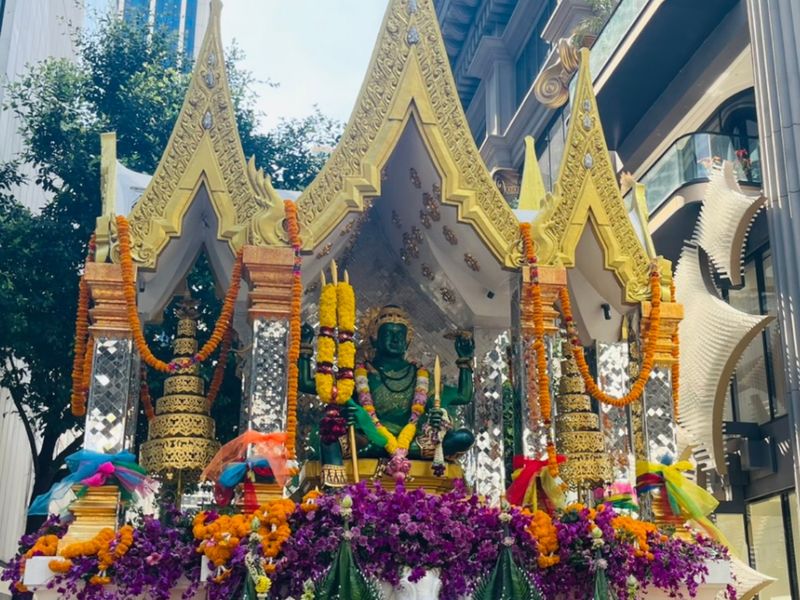
Indra Shrine
The Indra Shrine honors Indra, the king of heaven and a powerful guardian deity. His green body represents jade, a symbol of holiness, purity, and immortality. Indra’s role is to protect the world, ward off evil, and relieve human suffering.
According to legend, Indra possesses a thousand eyes across his body. Symbolically, this means he sees all human actions clearly and can distinguish right from wrong with sharp awareness — no good or bad deed escapes his sight.
You will also notice his vehicle, the Erawan elephant. In mythology, Erawan is a divine being who transforms into a white elephant to serve Indra. In his true form, he is said to have 33 heads, though most statues depict only three. The number represents Indra and his 33 close companions — once humans who performed great merit together and were later reborn as celestial beings. Because of this belief, Indra is thought to favor those who perform good deeds and live with integrity.
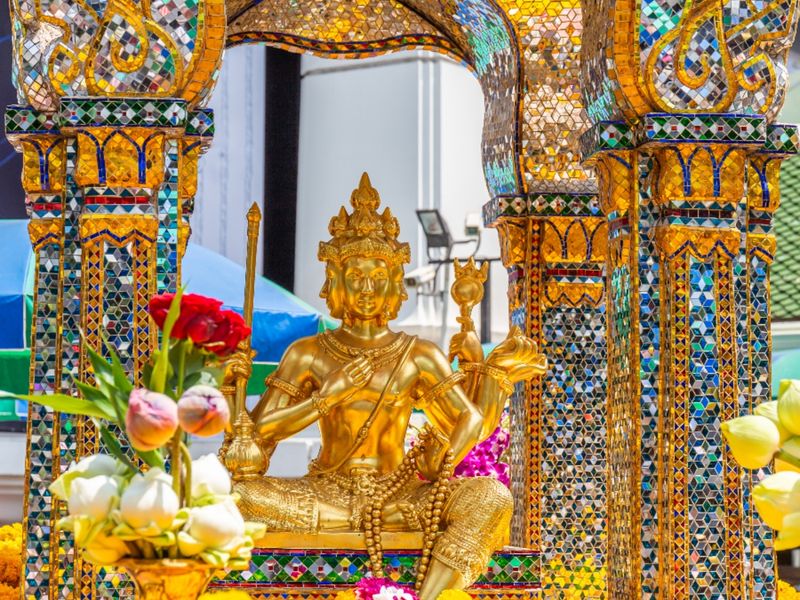
Lord Brahma Shrine
Lord Brahma, known as the Creator in Hindu belief, is one of the most revered deities at this site.
Nearly 70 years ago, during the construction of the former Erawan Hotel, the project faced a series of unexpected accidents and delays. Workers fell ill, structural issues arose, and even imported marble for the building was reportedly lost at sea. An astrologer was consulted and suggested that the name “Erawan” — associated with Indra’s powerful celestial elephant — was too strong for the land’s guardian spirit. To restore harmony and balance, it was recommended that a shrine dedicated to Lord Brahma be built on the site.
After the shrine was established, construction was said to continue smoothly. Since then, the shrine has become a significant spiritual landmark, with many believing in its sacred power and protective presence.
What to Prepare for the Audio tour?
- Comfortable shoes
- Bring cash for food or drinks and flowers during the tour, as most shops do not accept credit cards.